Team FLOW
Team Flow’s mission is to develop an affordable and accurate IV drip rate monitor targeted at low- and middle-income countries to reduce the burden of manual IV tracking, ultimately improving nurse workflows and improving patient outcomes.
Mission
In Ghana, as many as 50% of intravenous medications are administered at incorrect doses. This is in large part due to a lack of affordable IV monitoring technology, resulting in a reliance on manual calibration and tracking by nurses. Without a device to continuously monitor IV infusion rates, nurses must dedicate time to counting individual drops in the IV drip chamber, taking away from their other critical patient care responsibilities. Furthermore, without the use of cost-prohibitive infusion pumps that control infusion rates, IV lines are subject to changes in the infusion rate and, with no alert systems in place to notify the care team of these changes, incorrect dosing becomes a significant issue.

Background
Team Flow was founded in 2018 by four incubator members—Dipra Debnath, Jenna Livingston, Nai’a North, and Noah Welker—after a 2017 GHDI trip identified a need for improved IV monitoring solutions in under-resourced medical settings. A 2019 trip to Guatemala confirmed that this need was widespread globally. Later that year, Nai’a North joined a GHDI trip to Ghana, leading to an official partnership with emergency medicine staff at Komfo Anokye Teaching Hospital (KATH) in Kumasi. KATH, Ghana's second-largest hospital and a leading academic and research center in West Africa, collaborates with major institutions including the University of Michigan, the University of Rochester, Oxford University, the World Health Organization, and regional health ministries.
Project Overview
Our device includes a ring clip and a display/housing unit. The ring clip goes around the IV drip chamber; it sends light through the drip chamber and detects it at the other end. When a drip passes through this light beam, the device detects that as a spike in the signal. This signal is sent to the housing unit via the wiring and is cleaned and translated into a drip rate over time to be displayed on the screen. Nurses can set a target drip rate, which will allow them to be notified when the actual drip rate deviates from the target.
Project Updates
In F25, our focus was twofold: finalizing the device prototype and fundraising for our planned trip to Ghana. Thankfully, both of these objectives were met; we developed our MVPr and raised sufficient funds to send all interested team members on the trip. Upon return from Ghana in W26, our focus shifted to implementing the technical feedback we received from our partners at KATH. Alongside improving our device, we pivoted toward pursuing patent applications and FDA approval to further legitimize our device and work toward ultimately testing our device in the hospital setting.


Community Partner
Our community partner is the Komfo Anoyke Teaching Hospital (KATH) in Kumasi, Ghana, the leading teaching hospital in the region.

Travel Updates
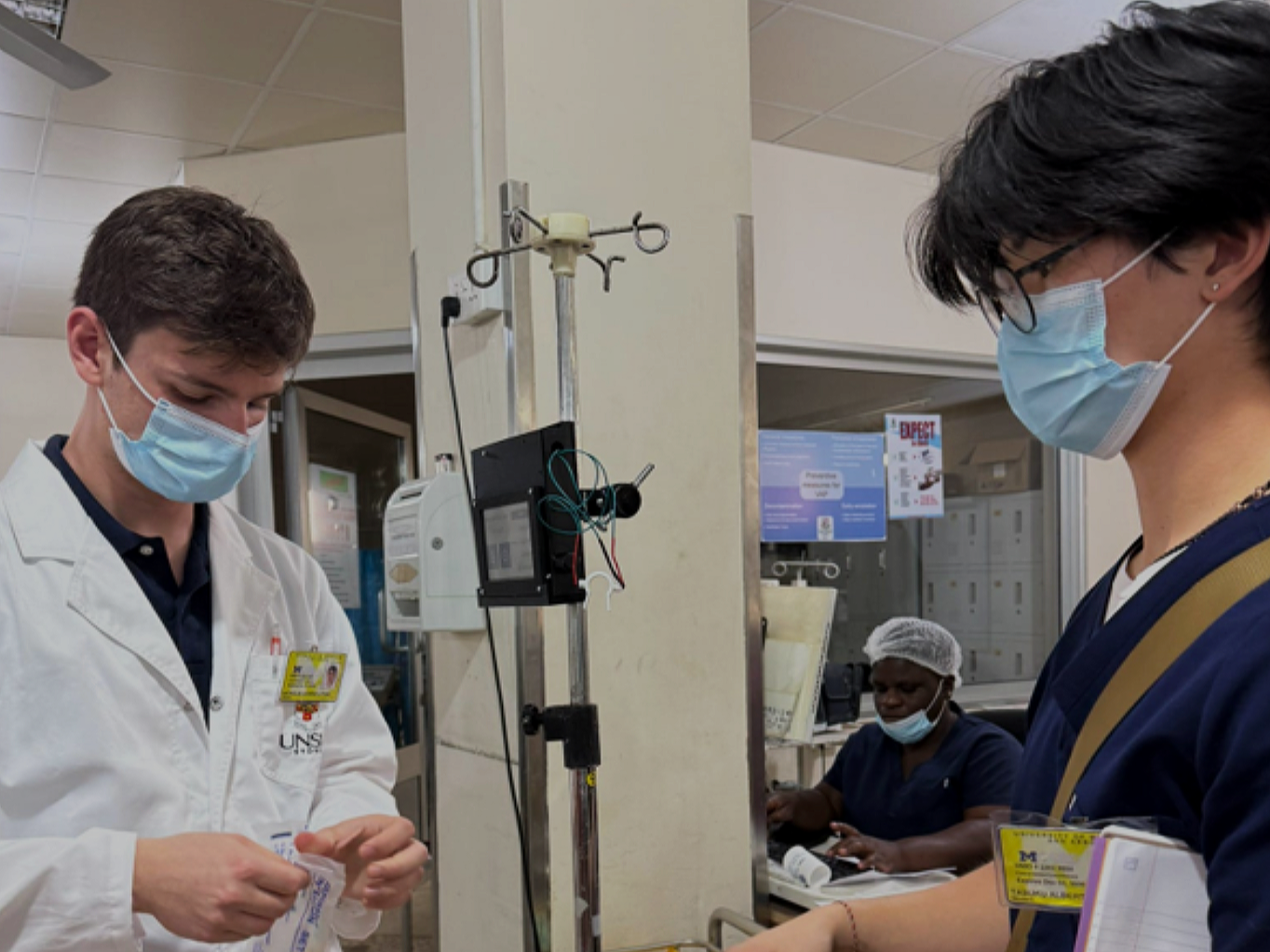
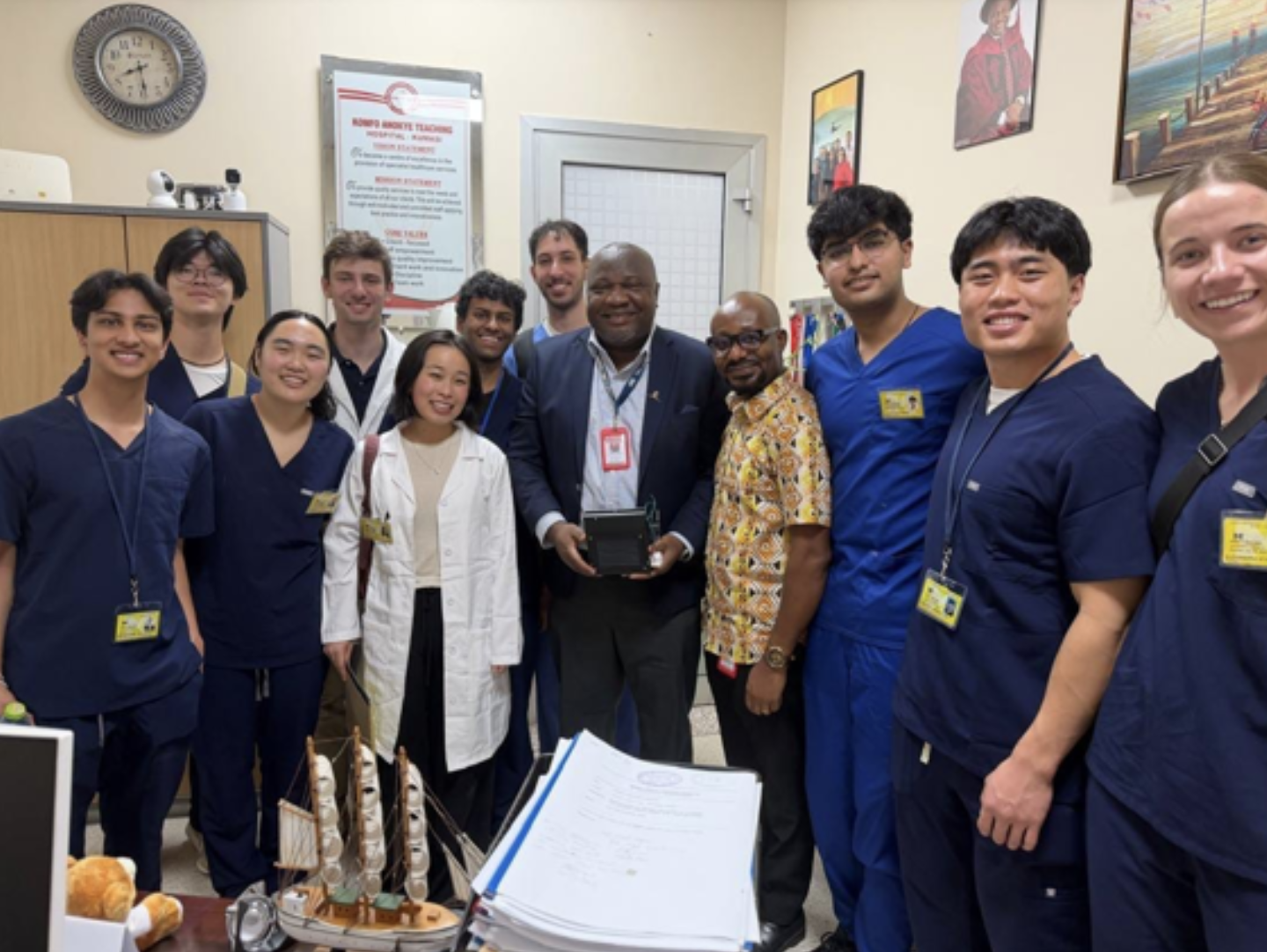
Our team traveled to Ghana to visit our community partner in December of 2025. We collaborated with clinical, administrative, and engineering staff, demonstrating our device technology and collecting crucial feedback to improve the integration of the device in the environment it is meant to serve. We received plenty of supportive feedback from nurses and physicians who would be interacting with the device regularly, and identified several points of improvement which we intend to target in the coming semester.


Meet the Team
-

George Moussa
Team Lead, BBA ‘28
-

Gia Gupta
Team Lead, Electrical Engineering & Robotics ‘28
-

Sam Desai
Engineering Lead, ECE ‘27
-

Andrew Pearl
Engineering Lead, BME 2029
-

Vanshika Yadav
Business Lead, BBA ‘28
-

Lyndsey Kim
Outreach Lead, BCN ‘28
Team Advisor

Dr. James Weiland, PhD
Professor, Biomedical Engineering
Contact Us
Email: mheal-team-flow-leads@umich.edu
Insta: @teamflowumich