
PeriOperative
There is a need for a method of regulating patient body temperature during surgery to prevent perioperative hypothermia and the ensuing complications that arise in low-resource hospitals.

Mission
There is a need for a method of regulating patient core body temperature during surgery to prevent perioperative hypothermia and the ensuing complications that arise in low-resource hospitals. Thus, our team’s mission is to provide a safe, effective, affordable, and reusable solution to allow healthcare systems across the Dominican Republic to effortlessly maintain patient core body temperature during surgery, resulting in improved patient outcomes and a reduced financial burden for both hospitals and patients. Specifically, our team strives to give operating rooms the ability to maintain normothermia in patients during surgical procedures to prevent complications that may arise as a result of perioperative hypothermia.

Background
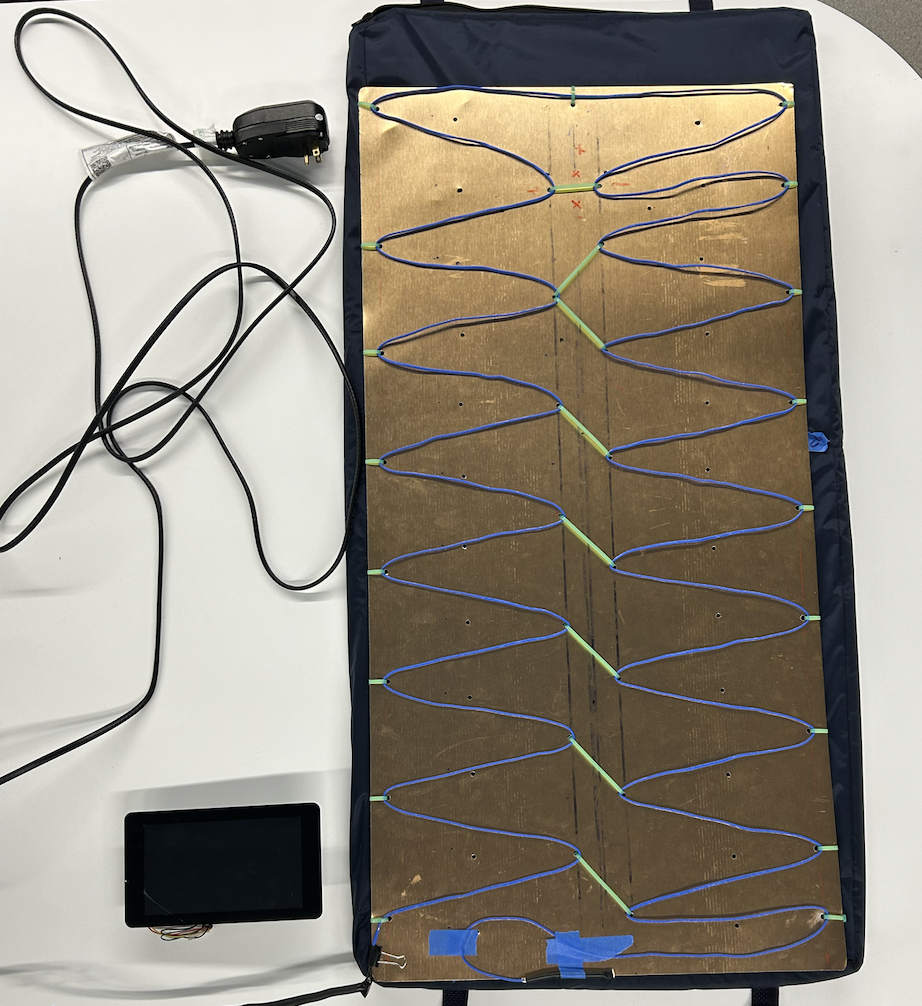
Under anesthesia required for surgical procedures, a patient experiences vasodilation and loses the ability to properly regulate their body temperature, causing a core-to-peripheral redistribution of body heat [1]. If core body temperature drops below 36.0 ℃, perioperative hypothermia is unintentionally induced, which may lead to cardiac events, impaired pharmacodynamics, increased risk of infection, excess blood loss, and even organ failure [1]. As a result, medical expenses increase, hospitalization time is prolonged, and there is a long-term decline in quality of life. Perioperative hypothermia has been reported to affect about 70% of surgical patients, thus establishing a need for an active warming system to prevent it from occurring [2]. Through a needs assessment conducted in the Dominican Republic in Spring 2022, our team found that many healthcare systems across the country lack effective methods for maintaining patients' core body temperature during surgeries. Current solutions used in the United States are expensive and non-reusable, making it difficult to implement them in the Dominican Republic. Based on our needs assessment and additional feedback from advisors, our team is developing a reusable, low-cost heated operation table mattress topper with a semi-automatic control system to adjust mattress temperature in response to input from an internal mattress temperature sensor.
References:
[1] Ruetzler, K. & Kurz, A. Consequences of Perioperative Hypothermia. Thermoregulation: From Basic Neuroscience to Clinical Neurology, Part II 687–697 (2018).
[2] Bilgin, H. Inadvertent Perioperative Hypothermia. Turkish Journal of Anesthesiology and Reanimation45, 124–126 (2017).
Project Overview
Our team's end goal is to provide functioning heated mattress toppers to public hospitals across the Dominican Republic. We are working towards this goal by referencing our User Needs document, created through stakeholder requirements, and testing current designs to ensure safety, efficacy, and affordability. We are in the process of developing a working prototype and receiving feedback from medical professionals in the United States and the Dominican Republic. This will aid in subteams adjusting designs based on feedback and creating a final functioning product to share with our community partners. In the far future we plan to discuss achieving regulatory clearance and scaling production.
Updates
For hardware, we updated wire configuration and began chemical degradation testing. In firmware, we completed user interface prototype for testing the functionality of the temperature sensor, met with multiple clinicians to get advice on creating an in-clinic use GUI, and established a testing protocol for a solid state relay

Community Partners:
Hospital General de la Plaza da la Salud | Santo Domingo
Hospital Morillo King | La Vega
Hospital Inmaculada Concepción | Cotuí
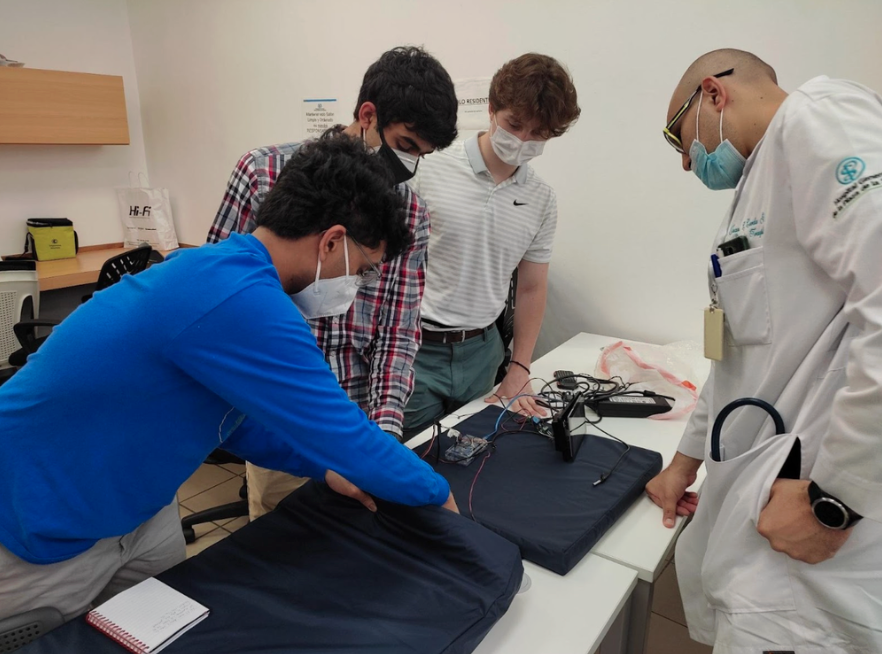
During our last trip to the Dominican Republic in Spring of 2022, our team conducted a needs assessment. We spoke with various medical professionals and patients in various hospitals in Santo Domingo, La Vega, and Cotuí. We demonstrated our prototype and received extensive feedback, which we have started to implement in our updated mattress designs. The team aims to return to the Dominican Republic in Winter 2025 to showcase the updated mattress prototype and receive further feedback.

Meet the Team
-

Saniya Reddy
Team Lead, Movement Science ‘28
-

Yutong He
Team Lead, Neuroscience ‘28
-
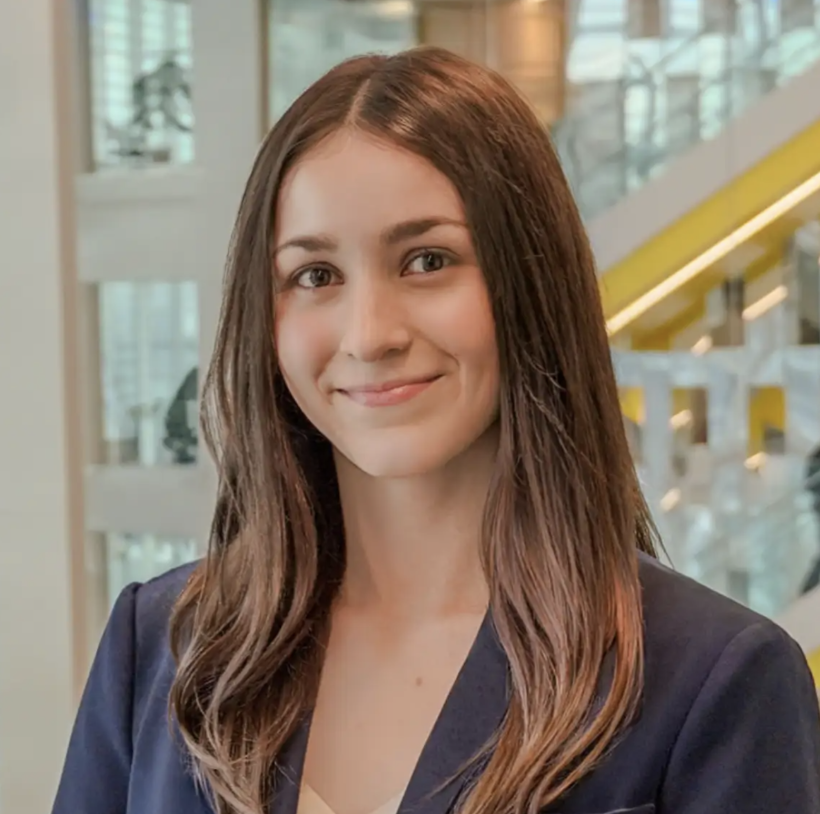
Madelynn Camarillo
Team Lead, Biomedical Engineering ‘27
Our Advisor

Dr. Kathleen Panagis
Ph.D in Biomedical EngineeringDr. Panagis has a B.S. in Bioelectrical Engineering from Marquette University and an M.S. and Ph.D. degrees in Biomedical Engineering from U-M. She has served as a postdoctoral research fellow and an engineering teaching consultant, in addition to being a Lecturer I.
Contact Us
Instagram: @umich.perioperative
Lead emails:
Saniya Reddy - saniyar@umich.edu
Yutong He - yutonghe@umich.edu
Madelynn Camarillo - mcamari@umich.edu