

The Initiative
The Initiative aims to develop affordable, accessible, and context-appropriate technologies that support neonatal thermoregulation and help improve care for low-birth-weight and preterm infants.
Our Mission

According to the World Health Organization (Care of the Preterm and Low Birthweight Infant, 2017), “low birth weight contributes to 60 to 80% of all neonatal deaths”. Due to low body fat and underdeveloped organs, neonates are unable to regulate their body temperature. Globally, more than 20 million infants are born at a low birth weight each year, and these infants face significantly greater risks of neonatal mortality and complications.
In many low-resource healthcare settings, access to conventional neonatal warming technologies can be limited by cost, maintenance, and other resource constraints. At Suntreso Government Hospital in Kumasi, Ghana, 80% of babies enter the critical care unit (CCU) hypothermic. The Initiative aims to develop affordable, accessible, and context-appropriate technologies that support neonatal thermoregulation and help improve care for low-birth-weight and preterm infants.

Background
The Initiative is a student-led project team within M-HEAL at the University of Michigan, an interdisciplinary organization focused on developing sustainable healthcare technologies in partnership with underserved communities. M-HEAL emphasizes socially engaged and human-centered design throughout the development process.
The Initiative was formed around the unmet need for accessible neonatal thermoregulation technologies in low-resource healthcare settings. Since its formation in 2016 with the goal of developing a hybrid infant warmer for communities in Haiti, the team has worked through an iterative design process involving research, prototyping, testing, and stakeholder engagement.
Our current work is guided by a 7+ year partnership with healthcare professionals and community stakeholders in Kumasi, Ghana, particularly at Suntreso Government Hospital. Our team now has two different warming “technologies”: a neonatal incubator and kangaroo mother carrier (KMC). Through continued collaboration and in-country travel, the team incorporates feedback from physicians, nurses, midwives, biomedical engineers, caregivers, and other stakeholders into each iteration of our designs
PROJECT OVERVIEW
The Initiative consists of four interdisciplinary subteams - Bassinet/Mechanical, Electrical, Kangaroo Mother Care (KMC), and Business - working together to reduce neonatal mortality in under-resourced regions. Together, these solutions are designed around a shared goal: providing sustainable, affordable, and user-centered neonatal warming options that can be implemented in resource-constrained healthcare environments.
Bassinet Incubator
A low-cost neonatal bassinet designed to create a safe and controlled environment for maintaining an infant's body temperature. The bassinet is being iteratively developed with an emphasis on heat retention, cleanability, durability, mobility, usability, and easy manufacturing.


Electrical System
An autonomous temperature-control system being developed to provide and regulate heat within the bassinet while prioritizing safety and usability in the intended clinical environment.
Kangaroo Mother Care (KMC) Carrier
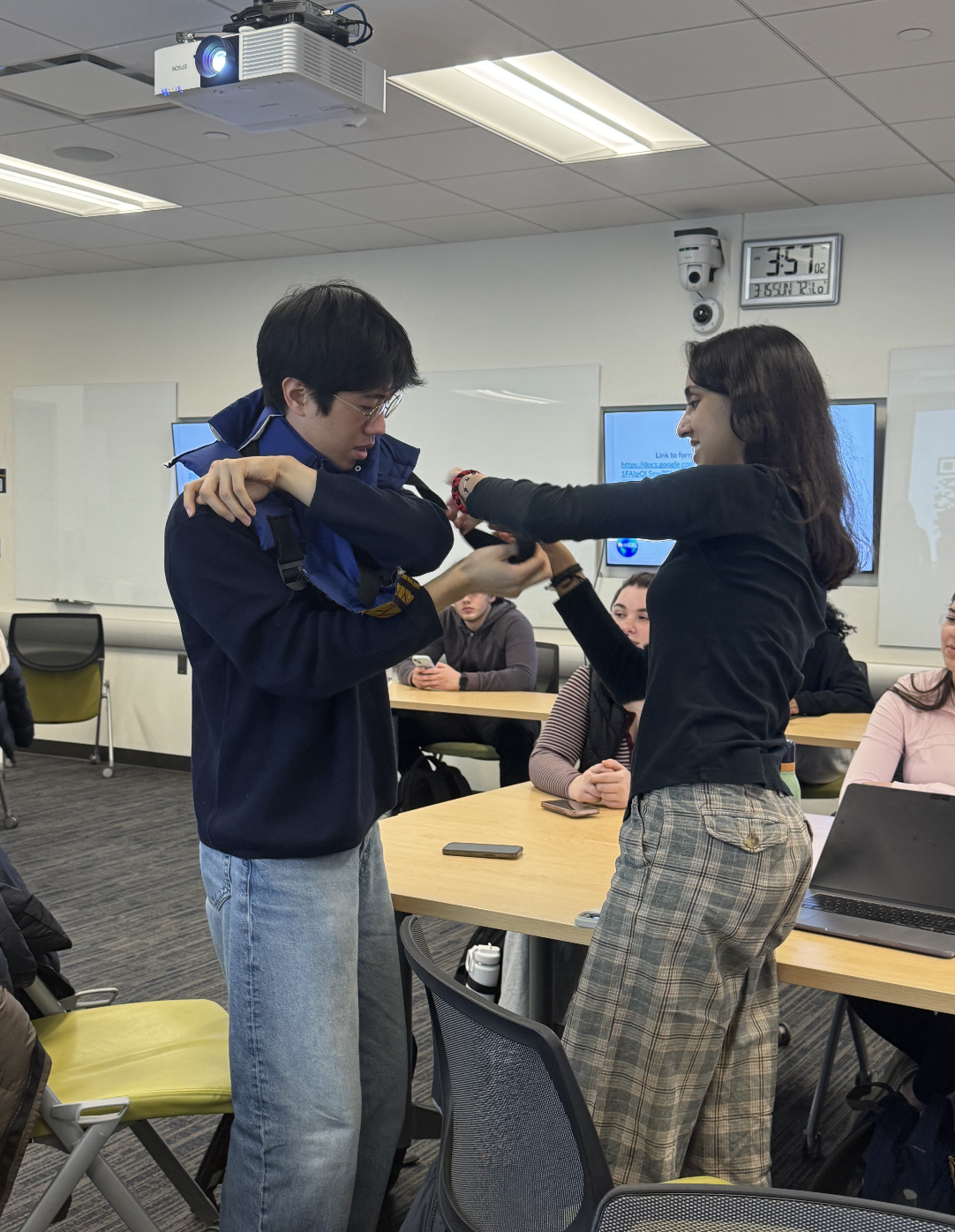
A wearable carrier designed to facilitate kangaroo mother care by supporting prolonged skin-to-skin contact between an infant and caregiver while remaining comfortable, secure, and appropriate for the intended community.

Business & Implementation
The Business subteam supports the project's long-term sustainability through stakeholder engagement, pitch competitions, fundraising efforts, and consideration of pathways for bringing the technologies into clinical use.
Our Community Partners
The Initiative prioritizes socially engaged design and long-term collaboration with the communities we aim to serve. Our primary community partners are Dr. Ashura Bakari, a pediatrician at Suntreso Government Hospital and Mansa Memorial Hospital in Kumasi, Ghana, and Dr. Joyce Emarkayo Bening, the Ahafo region supervisor and formerly a pediatrician at Suntreso, who provided invaluable clinical insight and feedback throughout our design process. Their partnership helps ensure that our technologies address the needs, workflows, and resource constraints of the environments in which they are intended to be used.
During our 2026 trip to Ghana, our team strengthened these partnerships through prototype presentations, clinical observations and shadowing, interviews, and discussions with healthcare professionals and caregivers. We also continued conversations with stakeholders at Komfo Anokye Teaching Hospital (KATH) and made new connections at Kwame Nkrumah University of Science and Technology, KNUST (Kumasi) departments of nursing and engineering to better understand neonatal care practices across healthcare settings in Kumasi and Ghana.
At the University of Michigan, The Initiative is supported by faculty advisor Dr. Solomon Adera and Dr. Cheryl Moyer. We also collaborate with external organizations and industry partners who provide technical expertise, materials, funding, and other resources that support the continued development of our technologies.


Travel Update
During the University of Michigan's 2026 spring break, 8 members of The Initiative traveled to Kumasi, Ghana to continue our collaboration with healthcare professionals and community partners. The trip centered on evaluating our devices within their intended use environment and gathering stakeholder feedback to guide future design decisions.
Team members presented the V5 bassinet and current KMC carrier, interviewed clinicians and caregivers, observed neonatal care practices, and participated in hospital rounds. These experiences provided valuable insight into usability, clinical workflow, neonatal thermoregulation, and opportunities for future design improvements.
Most importantly, the trip allowed our team to strengthen relationships with our community partners and ensure that the next stages of development remain grounded in community-identified needs and socially engaged design.

Winter 2026 Travel Team with Dr. Benning and Dr. Bakari

Suntreso Government Hospital visit picture with nurses, midwives, medical students, and physicians we presented to
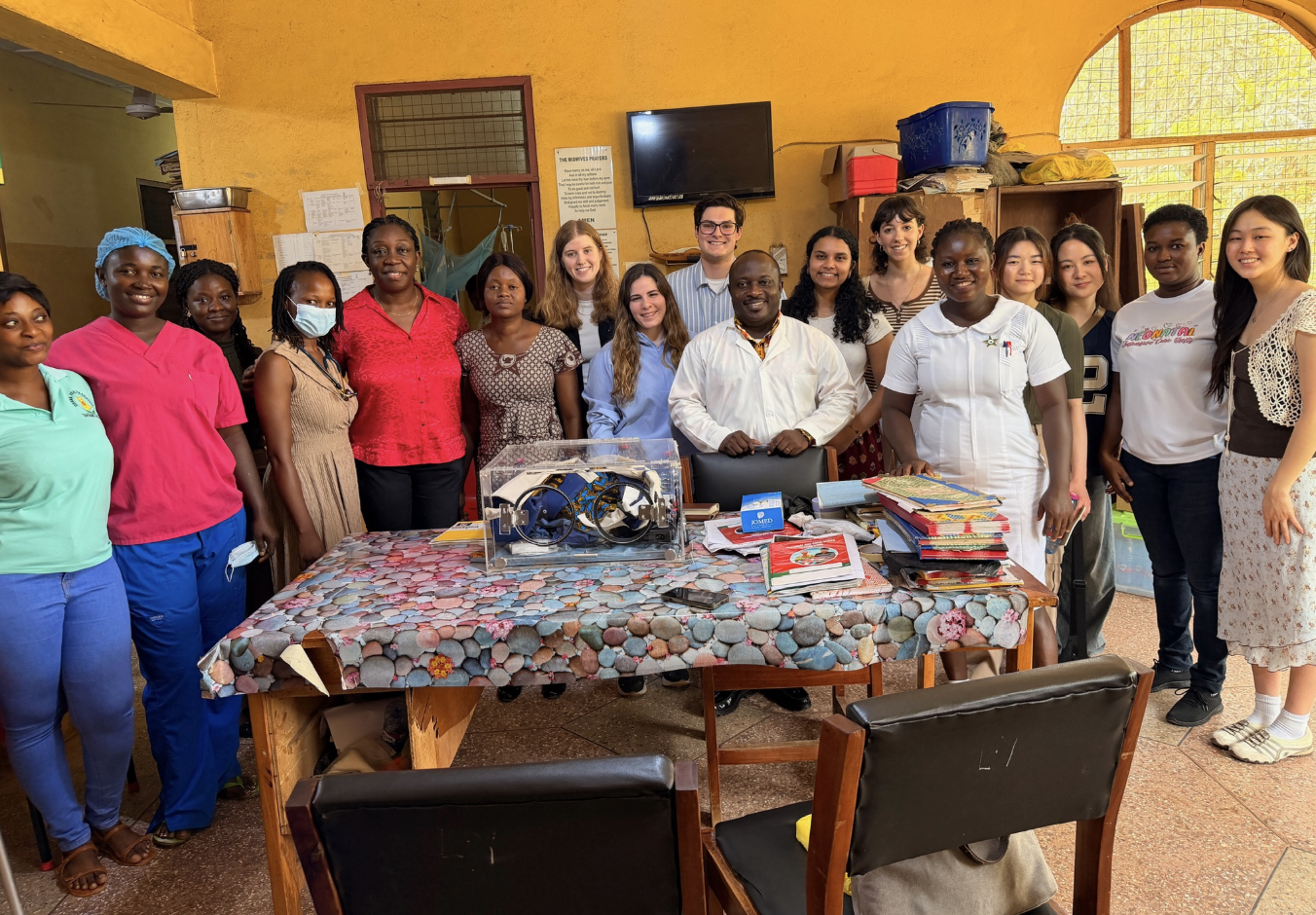

Bechem Government Hospital (Ahafo region) [NEW connection) visit picture with nurses, midwives, hospital director/surgeon, and Dr. Benning


Mansa Memorial Hospital visit pictures with nurses, hospital staff, and Dr. Bakari
Meet the Leads
-

Alba Gutierrez Cucurull
Team Co-Lead, Biomedical Engineering 2027
-

Trevor Martin
Team Co-Lead, Biomedical Engineering & Electrical Engineering Minor, 2027
-

Zian (Sam) Ren
Mechanical/ Bassinet Subteam Co-Lead, Mechanical Engineering 2027
-

Riya Jwalanna
Mechanical/ Bassinet Subteam Co-Lead, Biomedical Engineering 2027
-

Kaze Kuo
Electrical Subteam Lead, Electrical Engineering 2027
-

Ksheetisha (Tisha) Bhat
KMC Subteam Lead, Biomolecular Science 2026
-

Silvia Abbasi
Business Subteam Lead, BCN major & Data Science minor 2027
-

Stephanie Dong
Business Subteam Lead, BHS major & MDP minor 2028
Advisors

Solomon Adera, PhD
Associate Professor in Mechanical EngineeringAdera earned his Ph. D. in Mechanical Engineering from MIT. He was a postdoctoral associate at Harvard University before moving to the University of Michigan. His research interests include heat and mass transfer, phase-change (evaporation, condensation, freezing), water/fog harvesting, micro/nanoengineering, and fluid-structure interactions.

Cheryl Moyer is an Associate Professor of Learning Health Sciences and Obstetrics and Gynecology whose research focuses on the social and cultural factors affecting maternal and neonatal health in sub-Saharan Africa. Her work examines maternal and neonatal mortality and “near-miss” cases, using approaches such as social autopsies, sociocultural audits, and GIS mapping to better understand and address health disparities. She has led global health research projects in Ghana and contributes to international training initiatives for researchers in the U.S. and Ghana.
Associate Chair, Department of Learning Health Sciences; Professor of Learning Health Sciences; Professor of OBGYNCheryl Moyer, PhD, MPH
Contact Us
Team Email
Leads Email
@initiativeumich